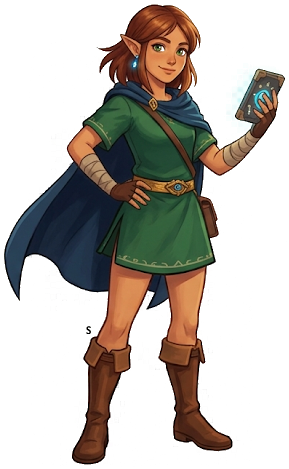
Sonia Story Guide: Queen of Hyrule and Sage of Time
Queen Sonia is one of the most important figures in Tears of the Kingdom, yet she appears only in Dragon's Tears memories and as a spiritual presence at the game's end. Her story — of power, compassion, and tragic death — is the emotional backbone of TotK's ancient history arc.
Who Is Sonia?
Sonia was a human woman of extraordinary power, specifically mastery over the flow of time. Her ability to manipulate temporal movement was matched only by Rauru's mastery of Light. The two met, fell in love, and their union created both the kingdom of Hyrule and the royal bloodline — a bloodline that descends directly to Princess Zelda thousands of years later.
Sonia wore a Secret Stone as an earring that amplified her time powers to their fullest potential. She could rewind, slow, and perceive time in ways that made her the most powerful sage of her era alongside Rauru.
Sonia and Zelda
The Dragon's Tears memories portray a deeply moving relationship between Sonia and Zelda. When Zelda arrives in the founding era (stranded in the past after the game's opening incident), Sonia is one of the first to recognize Zelda's authenticity and value. She becomes Zelda's mentor, protector, and closest ally in an unfamiliar time period.
Sonia recognizes Zelda's time power as an echo of her own — which makes narrative sense, since Zelda is Sonia's direct descendant and carries the same bloodline gift. The two practice together, comfort each other, and develop a bond that makes what follows all the more devastating.
Ganondorf's Betrayal and Sonia's Murder
Memory 6 is the darkest in the game. Ganondorf, having insinuated himself at Rauru's court under the pretense of fealty, waits for a moment alone with Sonia. He murders her and steals her Secret Stone of Time — an act of treachery that breaks the peace and begins the march toward the Imprisoning War.
Her Secret Stone, once amplifying her gentle mastery of time, becomes corrupted in Ganondorf's hands. He uses Sonia's stolen time power to generate Phantom Ganon copies of himself — a perverse inversion of what the stone was meant for.
Sonia's Legacy and Spiritual Role
Like Rauru, Sonia appears in the final sequence of TotK as a spiritual manifestation. Her and Rauru's combined power — channeled through the Sages and the present-day hero — is what makes Zelda's restoration from draconification possible. Even in death, across 10,000 years, her love for Zelda enables the miracle at the game's end.
Zelda herself is Sonia's legacy: her bloodline, her time power, and her compassionate wisdom all flow through the royal family to the princess Link fights beside in the present day.
Sonia in Gameplay
- Referenced in Mineru's journals in the Depths
- Sonia's stone type (Time) explains why Phantom Ganon can manipulate temporal illusions
- The Recall ability Link receives from Rauru's arm is derived in part from Sonia's time power filtered through the Sage's Oath
- Completing Memory 11 (Zelda and Sonia) before Memory 6 makes the murder's emotional impact significantly greater
Sonia's Time Power — Mechanics and Implications
Sonia's power over time is never given a hard mechanical definition in the game, but the Dragon's Tears memories show it operating in three distinct ways:
Temporal perception: Sonia can sense when something is "wrong" in the flow of time — anachronistic elements, events that don't fit the timeline's expected shape. This is why she immediately recognizes Zelda as significant: Zelda's presence in the founding era reads as a temporal anomaly, and Sonia's instinct is not to reject anomalies but to understand them.
Recall-adjacent reversal: In the memories, Sonia demonstrates an ability to reverse the motion of objects — the same mechanic that Recall represents in gameplay. Zelda's Recall ability (her role in the Water Temple sequence in the present day) is a gift from this bloodline. The ability to undo time for physical objects is ancestral.
Future-sight: Implied rather than shown explicitly, Sonia's counseling of Rauru consistently demonstrates prescient judgment. She identifies Zelda as trustworthy before evidence arrives. She urges patience with Ganondorf when Rauru's instinct is suspicion — not because she trusts Ganondorf, but because she reads the political moment correctly. Whether this is genuine temporal foresight or exceptional emotional intelligence is deliberately left ambiguous.
The Bloodline Connection to Princess Zelda
The most structurally important thing about Sonia is not her power or her death but her lineage. Sonia and Rauru's union created the royal bloodline of Hyrule. Every Princess Zelda in series history — across all timelines — is Sonia's descendant.
This genealogy explains several things about TotK's Zelda specifically:
- Her time abilities: Zelda's Recall power (which she uses to solve the Hyrule Castle mystery in the opening and later in the temple quests) is Sonia's gift passed through 10,000 years of inheritance
- Her Triforce connection: Sonia's lineage carries the Triforce of Wisdom's resonance — the divine attunement that makes "Princess Zelda" the sacred name, not just a naming convention
- Rauru's immediate recognition: When Zelda appears in the founding era, Rauru and Sonia respond with unusual openness to an apparent stranger. Part of this is character — they are generous, curious people. Part of it is Sonia's temporal sense registering something about Zelda that she can't name but can feel: this is ours.
The moment when Sonia determines that Zelda is from her bloodline (through Mineru's analysis of the time power Zelda demonstrates) is one of the memories' quietest emotional beats. Sonia doesn't react with shock or tears. She reacts with recognition — the particular warmth of someone who has discovered family in a stranger.
Why Ganondorf Chose Sonia
Of the five Sage Stones in the founding era, Ganondorf needed Sonia's Time Stone specifically because his plan required temporal duplication.
Creating Phantom Ganon — the preserved intelligent fragment of his consciousness that would survive his own draconification — required manipulating time in a way his own Darkness Stone couldn't accomplish. Darkness amplifies, corrupts, extends. Time copies, reverses, preserves. Only Sonia's Stone could create a working temporal copy of a living mind.
This is why Ganondorf spent years at court. He was waiting for access to Sonia — waiting for a moment she would be unguarded, not because she was weak, but because she was careful. He couldn't take her Stone in the open. He couldn't take it while Rauru was nearby. He needed a specific window, and he manufactured one using Phantom Ganon copies (lesser ones, created with whatever temporal ability his Darkness Stone could manage without Sonia's) to distract Rauru.
The patience required for this plan is disturbing. Ganondorf bowed before Rauru at court. He attended ceremonies. He watched Sonia for years, cataloging her patterns, waiting for his moment. The murder in Memory 6 was not impulsive. It was the execution of a multi-year strategy.
Sonia's Final Moment — Memory 6 Analysis
Memory 6 is the most visually restrained scene in TotK's ancient history sequence, and that restraint is what makes it effective.
Ganondorf doesn't announce his intention. He doesn't monologue. He uses a Phantom Ganon copy to draw Rauru away, approaches Sonia in what appears to be a normal court moment, and strikes. The violence is over in seconds. Sonia collapses. He takes the Stone from her ear with the same calm deliberateness as someone removing a piece of jewelry.
What makes the scene devastating is what it doesn't show. We don't see Sonia's last words. We don't see her fight back. We don't see Rauru's immediate reaction — the memory cuts. The audience is denied the cathartic details. The murder happened, the Stone is gone, and Sonia is dead. The game treats the viewer with exactly the same cruelty Ganondorf showed — efficient, complete, without ceremony.
The only emotional coda is Memory 7, where Rauru addresses the Sages. He doesn't mention Sonia by name. He doesn't need to. Every viewer who watched Memory 6 understands what he's carrying.
Sonia's Role in the Final Sequence
The ending of TotK requires multiple impossible things to happen simultaneously. Zelda, now fully draconified into the Light Dragon after 10,000 years, cannot simply be restored by any present-day power. The transformation is irreversible — except when it isn't.
The reversal requires:
- The five present-day Sage powers (Tulin, Sidon, Riju, Yunobo, Mineru)
- Their founding-era ancestors' spiritual manifestations (the original Sage vow still active)
- Rauru's Light, channeled through his arm and Link
- Sonia's Time, channeled through Zelda's own bloodline
- A critical mass of combined divine power exceeding what any single draconification should be able to survive
Sonia's contribution is not symbolic. The restoration mechanism relies on time manipulation — specifically, reversing Zelda's transformation rather than simply overpowering the dragon state. That reversal is Sonia's power, present in her descendant's body after 10,000 years of inheritance, activated by the combined Sage Oath at the moment of maximum divine convergence.
Zelda is, in a literal sense, her own ancestor's instrument of salvation. Sonia's power, passed through Zelda's bloodline, is what Zelda uses to survive becoming a dragon and return from it. The chain that connects Sonia's death in Memory 6 to Zelda's restoration in the ending credits is complete and closed: Ganondorf stole what was Sonia's; the world spent 10,000 years making sure Sonia's power could be used against him by someone he couldn't steal it from.
Dragon's Tears Memories Featuring Sonia
| Memory # | Title | Sonia's Role | |----------|-------|-------------| | Memory 2 | Zelda's arrival in the founding era | Present; watches Mineru's examination of Zelda | | Memory 4 | The founding of Hyrule (treaty scene) | Present beside Rauru at the ceremony | | Memory 5 | Zelda and Sonia — the warmest memory | Primary focus; the two practice time abilities together | | Memory 6 | Ganondorf's betrayal | Victim; the murder scene | | Memory 7 | Rauru addresses the Sages | Not present, but her absence drives every frame | | Ending | Restoration sequence | Spiritual manifestation; enables Zelda's return |
Recommended viewing order for maximum emotional impact:
- Complete Memories 1–5 in any order (they contextualize Sonia and Zelda's bond)
- View Memory 6 last among the ancient history sequence
- Memory 5 before Memory 6 makes the murder hit significantly harder — you've just seen them together, warm and alive, before seeing her die
Mineru's Memoir — In-World Documentation
Mineru's Memoir is a series of stone tablets found in the Depths, left by the Construct Sage before her own death. The Memoir documents Sonia's abilities from a first-person perspective — Mineru writes with grief and precision about what Sonia was and what her loss meant.
Memoir locations (Depths layer):
- Memo 1: Near the Abandoned Akkala Mine Lightroot area — Mineru's early impressions of Sonia's power
- Memo 3: Central Depths cavern near Kadipih Shrine — Mineru's account of Ganondorf's court presence and her suspicions
- Memo 5: Southern Depths near Lanayru zone — written after Sonia's death; Mineru's documentation of the Time Stone's theft and her analysis of Ganondorf's plan
The Memos are optional content but are the only in-world written record of Sonia from a contemporary perspective. Every other account of Sonia comes from her own actions in the Dragon's Tears memories — Mineru's Memoir is the closest thing to someone else's testimony about who she was.
Gameplay Connections
- Memory 11 (Zelda and Sonia's warmest scene) should be experienced before Memory 6 for maximum emotional impact
- Sonia's influence on Zelda's Recall ability means every time the player uses Recall in puzzles or combat, they are literally using Sonia's ancestral power
- The Bargainer Statue NPCs in the Depths make oblique references to "the queen's time" — interpreted by lore community as referencing Sonia's temporal influence on the Depths' architecture
- Finding Mineru's Memoir in the Depths provides in-world written documentation of Sonia's abilities and the grief Mineru carried after her death
- The Recall ability in combat — the link between Sonia's power and Link's Recall is not just lore-adjacent. Recall applied to enemy projectiles (arrow return, rock reversal) is the most direct mechanical expression of Sonia's temporal reversal in real gameplay
- Sonia's earring design: The Secret Stone of Time appears as a teardrop-shaped amber crystal. Players collecting gems throughout TotK are indirectly echoing the material that housed Sonia's power — amber as both an ore drop and a narrative symbol of time-preserved memory
Story — Lore — Sages — Dragon's Tears — Hyrule Founding
The Legend of Zelda: Tears of the Kingdom
Nintendo Switch — pick up your copy on Amazon
Affiliate disclosure: Hyrule Archive may earn a commission from purchases made through Amazon links on this site at no extra cost to you.